Recorded on 18 October 2024 and published on the Streamline and Thrive podcast in 2025.
Hello. So my daughter Audree is with me in the room right now while I’m recording this, and I just wanted to give an update. The first episode of this podcast was recorded at about 1:34 p.m., and now it’s 10:41 p.m., so that’s about nine hours later.
I’ve been going through my tasks for this 48 All-In Project, my 48 hours of all-in. And I like the focus that I’m giving this project, but at the same time, I also like that I’m giving myself some space to do some life admin things as well, and spend some more time with the kids. Yeah, it’s personal time. But also, when I sit at the desk and start working, I like that it gives me more focus when I have this time constraint of 48 hours. I’m not sure if I’ll be able to make this, but nevertheless, I’m very hopeful.
Pitching like a human
One of the tasks in this project is to send 25 cold pitches to my dream clients as a digital business manager. So this is going to be a little bit challenging, but I have some resources. I’m in a course called DBM Boot Camp by Deya Aliaga. She’s a YouTuber, and her handle is @mynameisdeya on YouTube. I’ve learned from her how to pitch more effectively, and in a way that’s not very robotic. Robotic, robotic. I don’t know how to say robotic. Anyway, in a way that doesn’t make you sound like a robot, but an actual human who wants to help other humans do business and things like that. But not just business, as I said in the first episode, but more about connecting with them and helping them on a very human level, really relating and connecting to them.
And because of that, I was inspired to create templates for these cold pitches that I’m about to do. What I did was I opened the task, and as I opened the task, I saw that I’d already built a pitch tracker table, I think last night. In the pitch tracker table, you would see the client names, some tags, the status of my pitch towards them, and whether I invited them to this podcast, because I also dream of inviting these people or talking to them on this podcast. And whether the pitch is rejected.
Aiming for rejections
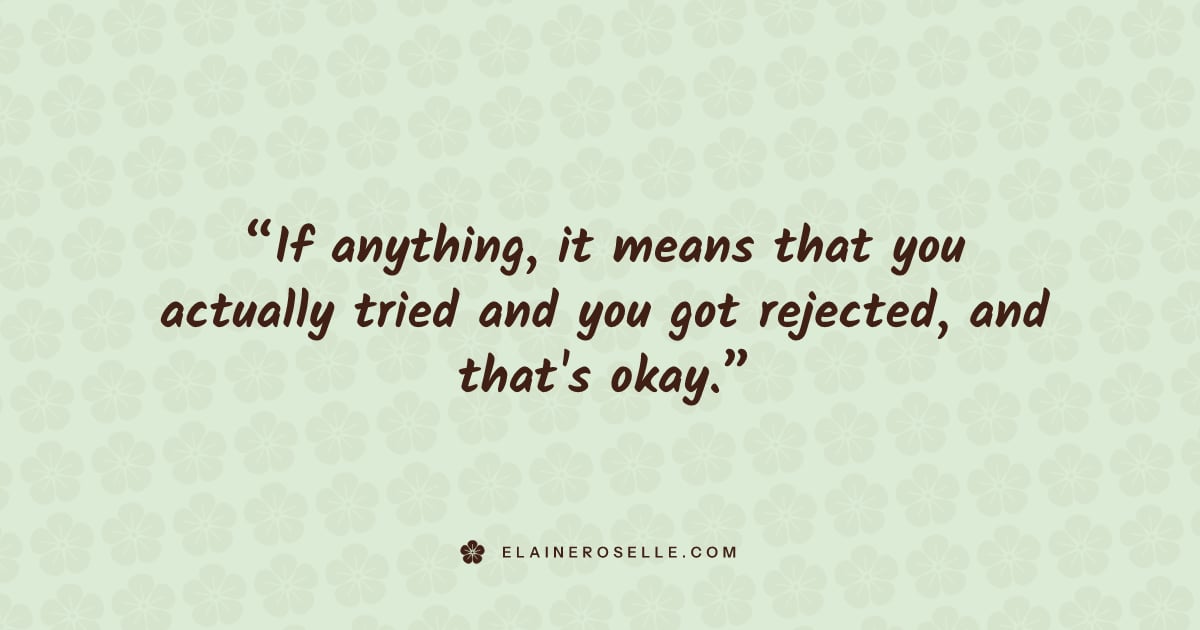
Now, this is one of the most crucial checkboxes of this tracker, because I aim to actually get these pitches rejected. I aim to get a hundred rejections or more, because the more that you put yourself out there, the more that you get rejected, right? Or maybe I’m just saying that and it will just manifest in my life. But nevertheless, I feel like the more that you put yourself out there and the more that you get rejected, the better your resilience is when it comes to online business, or business in general, or as a person in general, as a human. The rejections don’t really mean anything. If anything, it means that you actually tried and you got rejected, and that’s okay.
I’ve also been thinking about this lately, about failure. It’s not really failing if you didn’t actually try. It’s failing if you tried it and you didn’t succeed, right? If you didn’t try it, there’s no baseline with that. And I didn’t know. Failing is something that I feel like I’m excited to learn more about in this project. It’s something that I’ve resisted for some time, and it’s probably one of the reasons why it took a long time for me to get to this point.
The pitch template
So anyway, when you open a page in this database for each dream client that you want to pitch, you will see some client pitch prompts. There are three questions under two categories. The categories are personal and business. Under personal, there are three questions to ask about this client: why you want to work with this client, and how they inspire you. And then with business: how you can establish trust with them, how you can help them solve their challenges, and how you can give back their time.
There’s also a button to insert authority builder tips. Now, this is the part I got from Deya, and I think these tips are so good, because I feel like she has been pitched a lot. I know because I listened to her videos, and she said that she has had so many cold pitches in the past, and maybe until now. So I trust her to give good tips on this. I’ve yet to ask her if it’s okay that I share this template with anyone. And if she does say yes, then maybe I’m going to try to sell this as my first digital product, which is kind of nerve-racking. But yeah, business is going to business. That was so awkward.
Anyway, the second button that’s on this page, or template, is the bridge prompts. The bridge prompt is also one of the most important things to take note of when sending client pitches, I feel. These are questions like: What do you do? That has to be established and clear. What does your dream client care about? And how does your pitch apply to your dream client? This is just bridging why you’re doing this and what you’re doing to what they need, or what they might need that they don’t know yet.
So yeah, that’s about it for these prompts. I’m just going to close this now and check. It’s seven minutes, and my goal is ten minutes per episode.
Tracking the project
Also, this is all in a dashboard that I created and used to plan on selling, but I haven’t sold it yet. I haven’t actually launched it. I was almost in the middle of launching it when I decided to stop. And then a few months later, I gave birth to my second kid, so I didn’t have that much time anymore to focus back on this. And funny enough… oh no, that was another project. Never mind.
Anyway, in this project of recording ten podcast episodes, I also have a podcast tracker for it. I don’t think I created a template. No, not yet, but I might, and I might just as well make all of this a template for all of you to use, if you’d like. So this one I’ll label episode two, and then I’ll tag it with a few things later, and then I’ll mark it as recorded, and check the checkbox if I’ve already shared it, and publish that.
That’s why I’m tracking the time, to see if I reach ten minutes, because I plan to record 10 podcast episodes documenting this project. Times ten minutes, that’d be a hundred minutes of my time. So I hope it just fits within the 48-hour thing. As of right now, I have less than 24 hours left, and I’m not sure how this is going to go later. I’m going to update the podcast soon.
I’m kind of excited because of the prize that I created for this project, if or when I get to finish or succeed in this. And by the way, the success metric for me is just to tick all the boxes in here and to make sure that I enjoy what I’m doing. The prize I’m going to get is something that I’m also really excited for. So yeah, yep, yep. I feel like this is good. I’m on the right track. I’m positive, even though 24 hours is a little bit delusional, to think that I’m going to finish it by that time. I feel positive still.
See you in the next ten-minute update, and I’ll talk more about outlines, maybe, because I haven’t discussed it yet, and I actually haven’t created the outlines yet. So see ya. Bye-bye.
This is a lightly edited transcript, tidied with AI's help: filler words removed and paragraphs and headings added, with my words and their order kept.